Tag: blog

Barribugu mirana yiyura (The future is First Peoples)

Anissa Jones Guwiyady’u gulbanga Gayan gayan Colin Gale, Dharug warunggad, ngayiridyi Native Title. (I’d like to dedicate this to Uncle Colin Gale, our Senior Dharug Elder and Native Title claimant.) Warami. Budyari Nhaady’unya. Yanyiminga muday Ngurrawa. (Welcome. Good to see you. Walk softly on Country with me.) When I see the word barribugu (future), I think of my grandchildren and their children. It is a place where I may just be a memory to them, someone special who makes them smile as they remember me, but it is also a place where I can dream that it will be better…

… read more

Neurological Illness in Australian Fiction

I don’t read fiction about illness much. I know that’s not what you expected, as it goes directly against the premise of this essay. But fiction allows me to inhabit another body; it’s a luxury. I’m not sure I want to read about a body that is ill like mine. Thinking about my experience of illness takes up so much of my life already: the GP appointments, the psychologist, the psychiatrist, the neurologist I haven’t yet seen but have spent nine months on a waiting list for, imagining what it’ll be like to enter that room. I’m not as well…

… read more

Distilling Illness in ‘Shaping the Fractured Self’

Words || Katerina Bryant  “Sometimes pus, sometimes a poem… but always pain.” —Yehuda Amichai, as quoted in Shaping the Fractured Self The first poem I loved was Sylvia Plath’s Tulips. I didn’t understand it; not at first. I was in the last year of high school and our teacher took us through the poem; line by line, stanza by stanza. I remember the way she would pace the room as she spoke during English and History, calling Rasputin a “weirdo” and Charles Manson “freaky”. Her hair was henna red and her excitement awoke an excitement in me, even though I…

… read more

Australian Writing and Essays on Illness || Katerina Bryant

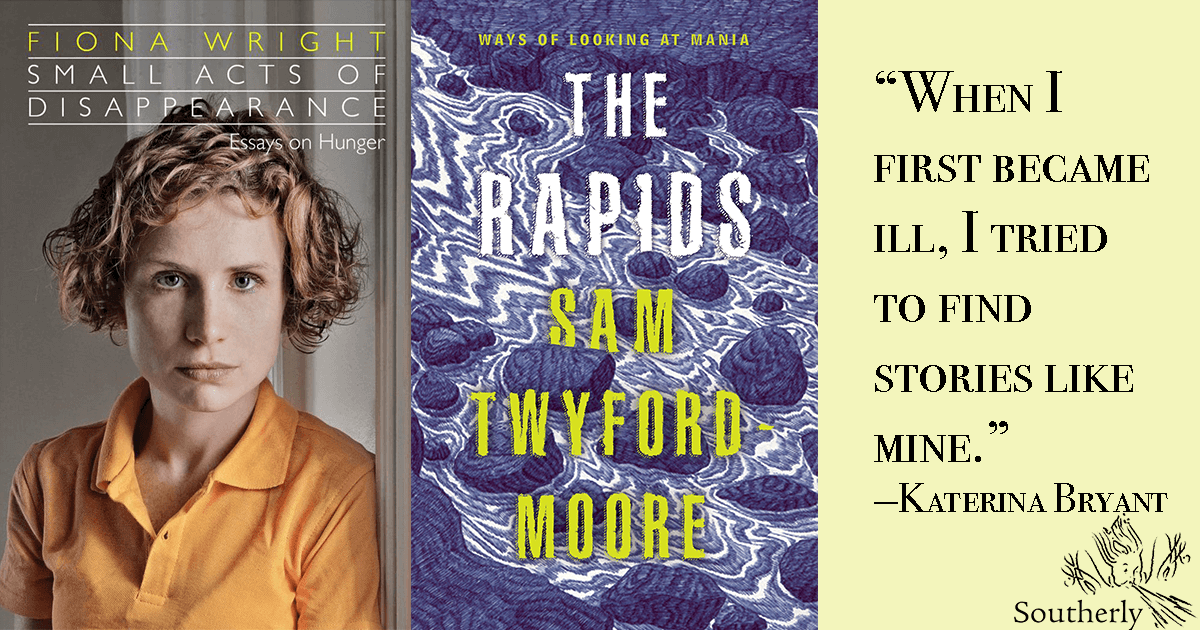
Words || Katerina Bryant  When I first became ill, I tried to find stories like mine. I needed to see myself on the page to believe I could adapt to a new life: a quieter, restrained life. I will not go into the particulars of my illness here—it is a sticky blend of mental illness and seizures that takes over the page once I begin to write about the details. But I will say that for the first few months of my illness, I left the house only for work. I did not dare live a life that could compound…

… read more